Smishing in the Workplace: Why SMS Phishing Often Falls Outside the Security Chain

THE GAME BEHIND THIS BLOG
One team. One shared goal: catch the hacker. What The Hack! is our serious game for security awareness. Employees discuss security questions and agree on an answer as a team.
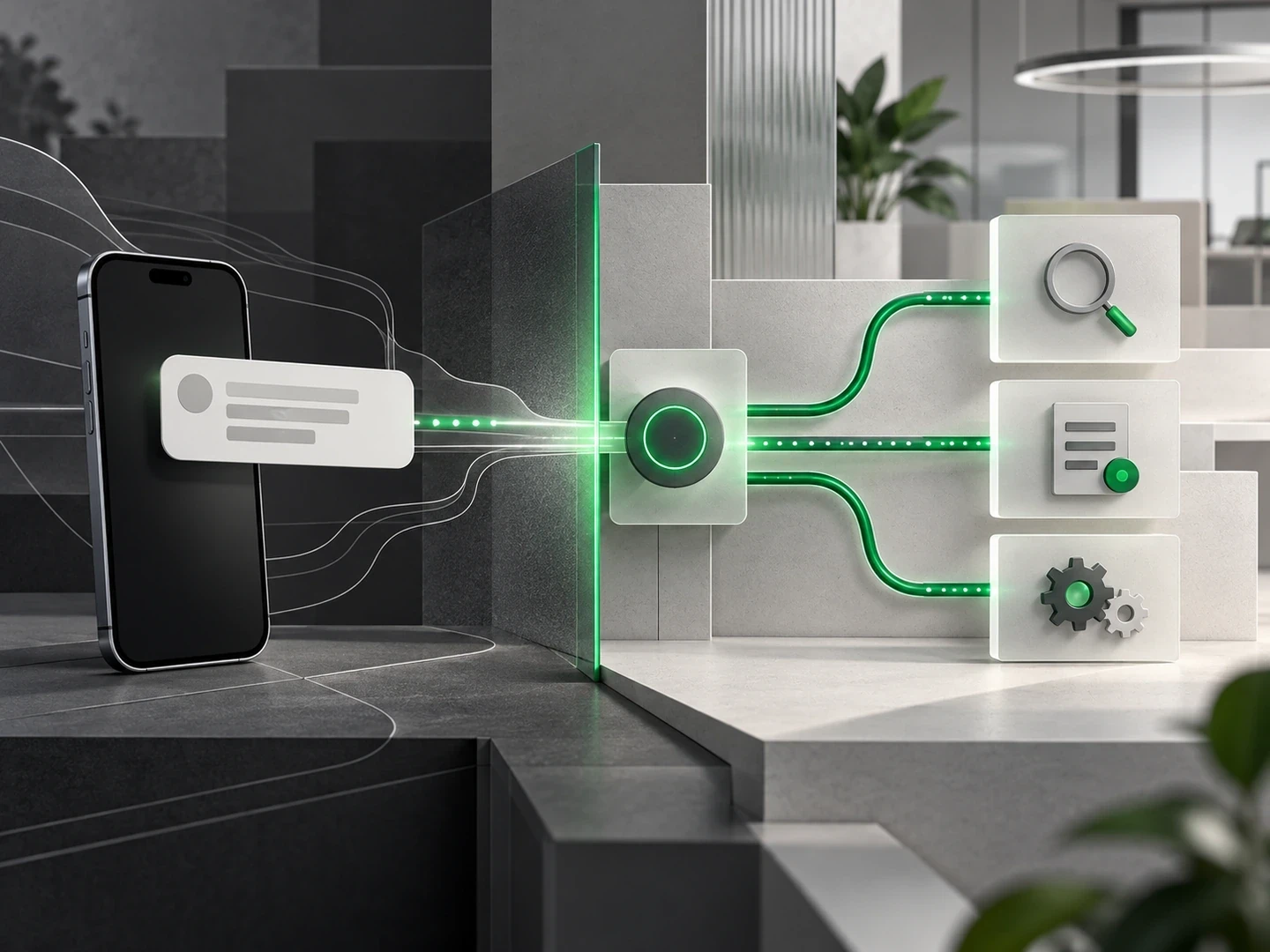
In many companies, phishing protection is initially organized as an email task: gateways filter messages, suspicious senders are analyzed, and employees can forward an email to the security team. Smishing shifts the same deceptive mechanism to SMS and messenger apps. This does not just change the channel. Often, the very technical and organizational pathways required to make a suspicious event visible, verifiable, and quickly actionable are missing there.
For CISOs and awareness managers, smishing is therefore more than just another phishing variant. The critical question is: Does the mobile channel reach the same chain of protection as corporate email—or does responsibility end with the instruction "Don't click"?
Smishing reaches employees outside email protection
ENISA describes smishing as phishing via SMS. The German Federal Network Agency (Bundesnetzagentur) also documents fraud attempts via messenger apps: criminals impersonate entities like banks, parcel delivery services, or executives, use familiar design elements, and create time pressure. The goal may be to harvest data, trigger payments, provoke a callback, or prompt the recipient to visit a compromised website.
In a corporate context, the primary problem with this is distributed visibility. An SMS can arrive on a managed corporate device, a personal smartphone used for business, or a completely private device. The link may then lead to a mobile browser, an app, or a login page. The request may appear personal and yet target corporate credentials, payment processes, or the identity of an executive.
An email gateway cannot see this path. Nor does the security team recognize any attack pattern as long as employees do not report the message and transmit the necessary information. Smishing is thus both a communication problem and a telemetry problem.
Switching devices alters the decision-making context
Fewer contextual details are available simultaneously on a smartphone. Sender names, domains, full destination URLs, and technical indicators are harder to compare than in a desktop analysis. Added to this is the switch between channels: an SMS claims, for example, that there is a problem with an account, and then directs the user to a website or a phone call.
This transition is similar to the risk in QR code phishing. The article Detecting Quishing shows why protective mechanisms need to be reassessed as soon as an action jumps from the visible initial channel to another device or medium. With smishing, that same loss of control happens within a few taps on a single smartphone.
Security leaders should therefore not only ask whether employees recognize a suspicious SMS. More importantly, they should ask whether employees can verify a claimed task independently of the provided link, the specified phone number, or the visible sender.
Five control questions for smishing in the enterprise
Resilient protection is built on multiple layers. Five questions help when evaluating your own organization:
Which mobile channels belong to the business risk? In addition to SMS, these include approved messenger services, personal messengers with business contacts, and messages sent to publicly known mobile numbers.
How is a request independently verified? The contact address or phone number must come from a known source. Details provided in the suspicious message itself do not count as a second channel.
Which devices are technically covered? Mobile Device Management, browser protection, app policies, and identity controls can only be effective where ownership and device models are clearly defined.
How do employees report a mobile message? The reporting path must be accessible from the smartphone and must not assume that the message can simply be forwarded like an email.
What happens after a report is made? Security requires defined triage, clear responsibilities, and a way to rapidly review affected identities, devices, or processes.
These questions also reveal an important limit of awareness: vigilance can trigger an alert. It replaces neither the technical security of the device nor the incident response process following a click, data entry, or payment.
A reporting channel must deliver actionable information
"Report suspicious messages" is only an actionable rule if employees know where to send reports and what information to provide. A screenshot can capture the visible text, but often obscures destination URLs, timestamps, or the actual sender. Simply copying a link can, in turn, be risky and lose context.
The internal process should therefore define which secure transmission channels are permitted and what details triage requires. These typically include the timestamp and incoming channel, visible sender, claimed organization or person, the nature of the requested action, and information on whether a link was opened, an app was installed, a login was attempted, or a payment was initiated.
These details help prioritize the response. An unread parcel delivery SMS requires different handling than an entered corporate credential or a confirmed transaction. Prioritization should reside within the security process, not with the person reporting it.
Bringing awareness and mobile controls together
Awareness should tie the mobile channel to real corporate policies. Employees need to know which business directives are never issued exclusively via SMS or messenger apps, how to independently verify a sender's identity, and how they can report a suspicion even from a personal device. For unexpected confirmation requests, the article Detecting MFA Fatigue complements this perspective with identity and authentication controls.
Depending on the device strategy, the technical layer includes managed browsers, app sources, permissions, mobile protection capabilities, and strong authentication. What matters is the cohesive architecture: a policy that blends personal and business use without clarifying responsibilities creates gaps. A technical tool without an accessible reporting channel leaves valuable clues unused.
Evaluation should also remain nuanced. The number of reported SMS messages proves neither a specific risk level nor secure behavior. However, combined with response times, reporting data quality, and triage outcomes, it can demonstrate whether the mobile channel is gaining organizational visibility.
What The Hack! as a building block in your awareness program
The Security Awareness Platform by What The Hack! combines team and solo play. In the team format, employees discuss security scenarios and agree on an answer; in solo mode, they can play independently and select topical campaigns. This allows various security decisions to be integrated into an ongoing awareness program.
For smishing, operational translation remains critical: Which messengers are approved? What is the internal reporting path? Who investigates a suspicion? Such organization-specific rules must be clearly defined and consistently communicated through the chosen awareness formats. Game results and metrics can highlight training priorities, but they are no substitute for evaluating the real-world reporting and response process.
Conclusion: Integrating the mobile channel into the security process
Smishing is not dangerous solely because an SMS can look convincing. The structural problem arises when a business-relevant message arrives outside standard controls and the path back to the security team remains unclear.
A resilient approach combines independent verification, mobile safeguards, an accessible reporting channel, and a defined response. Only then does individual vigilance become an actionable security signal for the organization.
Sources and further information
ENISA: “Off the Hook – Don’t be Phished this Cybersecurity Month!”, October 1, 2025. Classification of smishing as an SMS-based phishing variant and an overview of current phishing methods.
Federal Network Agency (Bundesnetzagentur): “SMS and Messenger Spam Variants” and “Warning: CEO Phishing Messages in Circulation”. Current German examples of impersonation, time pressure, independent verification, and reporting.

Your Contact Person
Thorben Steenmanns
Chief Gaming Officer & Head of Sales
What if your next awareness training remained a positive experience in the minds of your colleagues?
A vibrant security culture is the most powerful defense against hackers. I help you build yours—using our serious business game What The Hack! for cybersecurity, data protection, and compliance.


